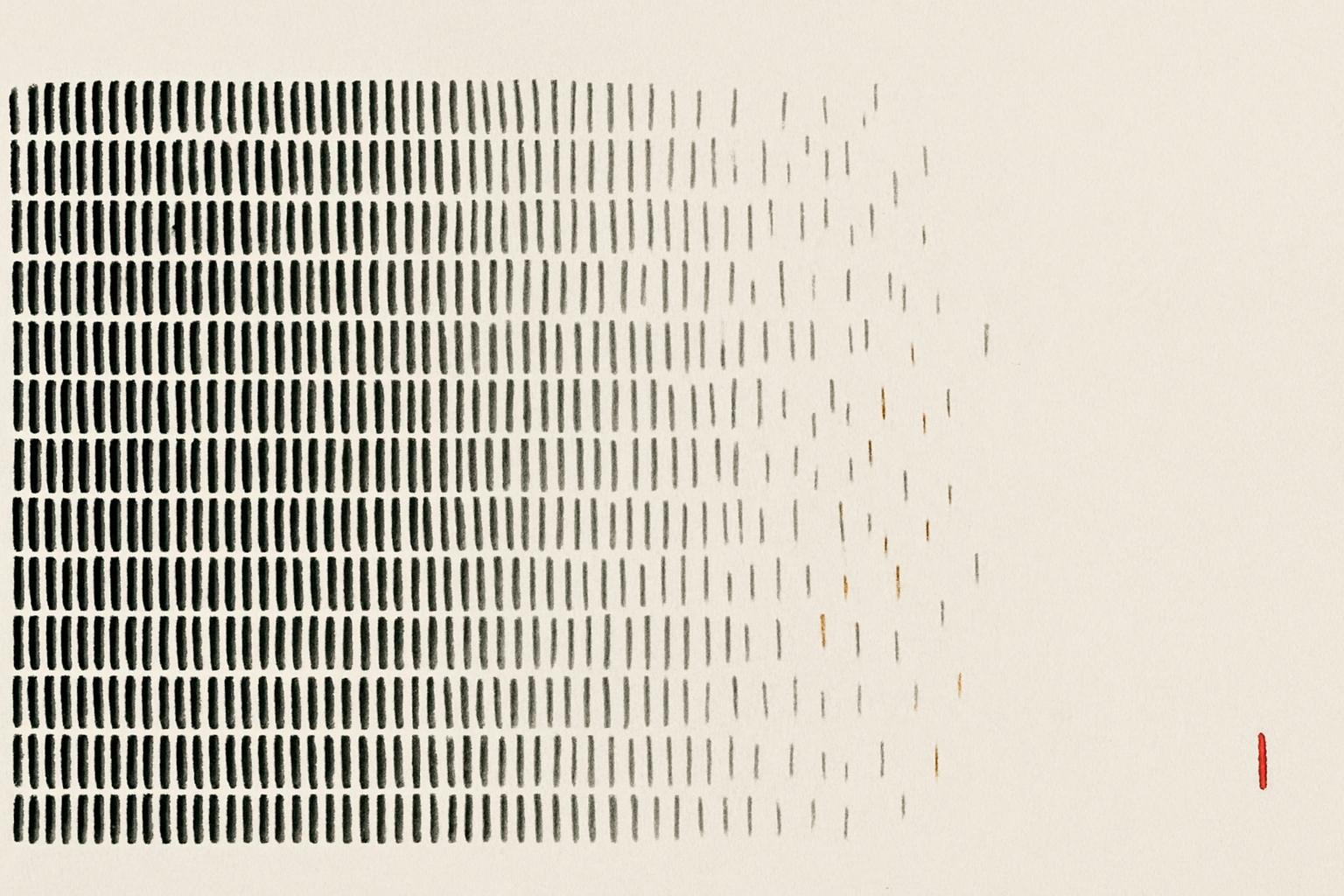
FDA entered a termination date on 288 recall records in its device recall file in the whole of 2025, covering 72 recall events. In 2024 it entered termination dates on 1,607 recall records, covering 527 recall events. Counted as recall events, the fall from 2024 to 2025 is 86.3%, and 72 recall events is the lowest annual total in a file that starts in 2003.
The same stop shows in how long an individual recall takes to close. Of the 3,029 recall records initiated in 2016, 89% carried a termination date within 1,095 days of the initiation date. Of the 1,288 recall records initiated in the first half of 2023, 2.6% did.
For a supplier quality manager who scores a vendor's FDA recall history at qualification, that changes what the status column is worth. At the 2026-09-10 export of the recall file, 80.8% of recall records initiated in 2022 are still flagged 'Open, Classified', along with 95.6% of those initiated in 2023, 98.8% of 2024 and 99% of 2025. A supplier that closed out its corrective action two years ago and a supplier that has done nothing sit under the same word.
The cutoff that follows from the cohort figures is the initiation date. For recalls initiated after 2021, the status field no longer separates a finished correction from an unfinished one, and the evidence has to come from the supplier: the firm's effectiveness check and its disposition records for recovered product, with FDA's termination letter where one has been issued. The regulatory affairs lead on the other side of that customer questionnaire has the agency-wide counts to point at, which answers the question better than a promise that the letter is coming.
What 'Open, Classified' means in this file
The phrase is the status a classified recall record carries until FDA enters a termination date. At the 2026-09-10 export, all 14,055 recall records flagged 'Open, Classified' have no termination date in the file, and almost every record flagged 'Terminated' has one. The word tracks FDA's data entry on a single field.
The cohort figures below never read that field. They compare the termination date against the initiation date on each row, so a record counts as closed when FDA has dated the closure, whatever the status column says.
The cohort decay, year by year
Each figure is the share of recall records initiated in that calendar year that carry a termination date no more than 1,095 days after initiation, measured at the 2026-09-10 export.
- 2016, 89% of recall records terminated within three years
- 2017, 72.4%
- 2018, 73.2%
- 2019, 61.5%
- 2020, 61.8%
- 2021, 42.3%
- 2022, 14.5%
- first half of 2023, 2.6%
Records are products, and a single recall event can cover many of them, so the same cohorts were counted again as events, where an event closes only when every one of its rows has been terminated. 86.1% of the 1,232 recall events initiated in 2016 were fully terminated within three years. The figure is 49.3% for the 900 recall events initiated in 2021, 22.6% for the 839 initiated in 2022 and 1.9% for the 417 initiated in the first half of 2023.
Terminations recorded per year
Counted as recall events with at least one row carrying a termination date in the calendar year, FDA recorded 1,181 in 2016, 1,389 in 2017, 700 in 2018, 616 in 2019, 1,219 in 2020, 764 in 2021, 427 in 2022, 569 in 2023 and 527 in 2024. In 2025 it recorded 72 recall events. The weakest of the years from 2018 to 2024 is 2022, at 427 recall events, and the strongest is 2020, at 1,219 recall events. The step down comes in 2025.
Counted as recall records, the same series runs 2,580, 3,988, 1,838, 1,747, 3,802, 1,821, 1,254, 1,438 and 1,607 from 2016 to 2024, then 288 in 2025. 183 of those 288 recall records belong to one Maquet Cardiovascular recall event, res event number 82703, initiated 2019-04-18. The record count for 2025 therefore reads higher than the closeout activity behind it, and the event count, 72 recall events, is the figure to carry into a scorecard discussion.
2026 is a partial year in this export and is left out of the series. To the newest record in the file, dated 2026-08-18, it holds 159 recall records and 58 recall events with a 2026 termination date.
What is sitting open
At the 2026-09-10 export, 14,055 recall records are flagged 'Open, Classified', covering 4,678 recall events. 5,412 of those records, covering 1,940 recall events, were initiated more than three years before the export date. A further 442 recall records carry FDA's 'Completed' status, which means the firm has reported its action finished while FDA has not terminated the recall. Those 442 recall records are outside the backlog figure above.
The enforcement report carries the same dates
All 1,607 recall records with a 2024 termination date and all 288 with a 2025 termination date match an enforcement row on recall number with an identical termination date. The enforcement export of 2026-09-02 counts 527 recall events with a 2024 termination date and 72 with a 2025 termination date. Both files come out of the same recall system, so the match shows that the two exports agree with each other, and says nothing about whether the closeout work happened.
GAO has already reported the cause
The slowdown is on the public record with a reason attached. Medical Device Recalls: HHS and FDA Should Address Limitations in Oversight of Recall Process (GAO-26-107619) found that FDA missed its own three-month goal for terminating recalls in every year from FY2020 through FY2024, and the full report text quotes FDA officials describing recall termination as a back burner task under limited resources. Cause for the pattern in these counts belongs to that report. The recall file records what was entered and when, and carries nothing about why.
GAO's window ends with FY2024. The 2025 total, 72 recall events, falls outside it, and the by-year cohort shares are not in the report. Size and date are what the counts here add to a finding that is already published.
FDA documents the behaviour of the status field on its own pages. The Device Enforcement overview (openFDA) states that recall status is not updated after classification, and the Medical Device Recalls database (accessdata.fda.gov) screen explains that status changes at classification and at termination. A reader who already discounts the status column will find only the size of the effect new here.
How the numbers were counted
Two files, downloaded separately, each with its own export date.
The recall file, FDA's Recall Enterprise System extract, was exported 2026-09-10 and its newest record is dated 2026-08-18. One row is one product record inside a recall, identified by cfres_id; a recall event is a distinct res_event_number and can carry many rows. Cohort shares count rows by event_date_initiated inside the stated window and treat a row as terminated within three years when event_date_terminated is no more than 1,095 days after event_date_initiated. At event grain, an event counts as fully terminated within three years when every one of its rows is terminated and the last termination falls within 1,095 days of the first initiation. Termination-year counts take rows with event_date_terminated inside the calendar year, and events with at least one such row. The backlog counts rows with recall_status = 'Open, Classified' at the export, and the over-three-years split uses event_date_initiated before 2023-09-10, the export date minus three years. The count of 442 recall records uses recall_status = 'Completed'.
The enforcement file, the device enforcement report, was exported 2026-09-02 and its newest record is also dated 2026-08-18. One row is one recall-number record; events are distinct event_id. The cross-check joins recall_number in the enforcement file to product_res_number in the recall file and compares the termination dates on both sides.
What these files cannot say
They show that FDA has almost stopped entering terminations into the recall system. They cannot separate that from FDA having stopped the closeout work itself. A systems migration in 2025, or a change in who is allowed to enter the date, would produce the same shape in the data. GAO's report supplies the cause; these counts do not.
The three-year clock on the first-half-2023 cohort closed 2026-06-30, seven weeks before the newest record in this export. A later export could add terminations dated before that clock closed, which would move the 2.6%. The 2022 cohort is the firmer number for anyone who wants margin: its clock closed 2025-12-31, and 14.5% of recall records and 22.6% of recall events initiated in 2022 were terminated within three years.
Whether vendor scorecards read the status column at all was not measured. The action set out above assumes they do, and that assumption is worth testing inside a supplier quality procedure before the procedure is rewritten around it.
A small number of rows flagged 'Terminated' carry no termination date, and they are excluded from every termination count above. One Medtronic Vascular recall event is flagged 'Completed' in the enforcement report and 'Terminated' in the recall file. Neither moves any figure printed here.
Prior coverage in the device trade press and by consultancies was not swept in full, so the 2025 step may have been reported elsewhere since GAO's report went out.